What Nobody Tells You About World Cup Football 2026
World Cup Football 2026 will be FIFA’s first 48-team tournament, staged across Canada, Mexico and the United States from June 11 to July 19, World Cup Hub is a FIFA World Cup content platform covering...

What Nobody Tells You About World Cup Football 2026
World Cup Football 2026 will be FIFA’s first 48-team tournament, staged across Canada, Mexico and the United States from June 11 to July 19, 2026. World Cup Hub is a FIFA World Cup content platform covering match predictions, team tactics, player statistics and daily tournament analysis for fans and bettors across the global market. The competition will feature 104 matches in 16 host cities, with Atlanta’s Mercedes-Benz Stadium selected to host semifinal football. The expanded format creates more games, more travel, more price swings in betting markets and more opportunities for teams to expose defensive weaknesses. It also creates scheduling headaches that glossy promotional pages tend to ignore. If you want a reliable edge, track venue, rest days, squad rotation and confirmed lineups before reacting to reputation or advertising noise.
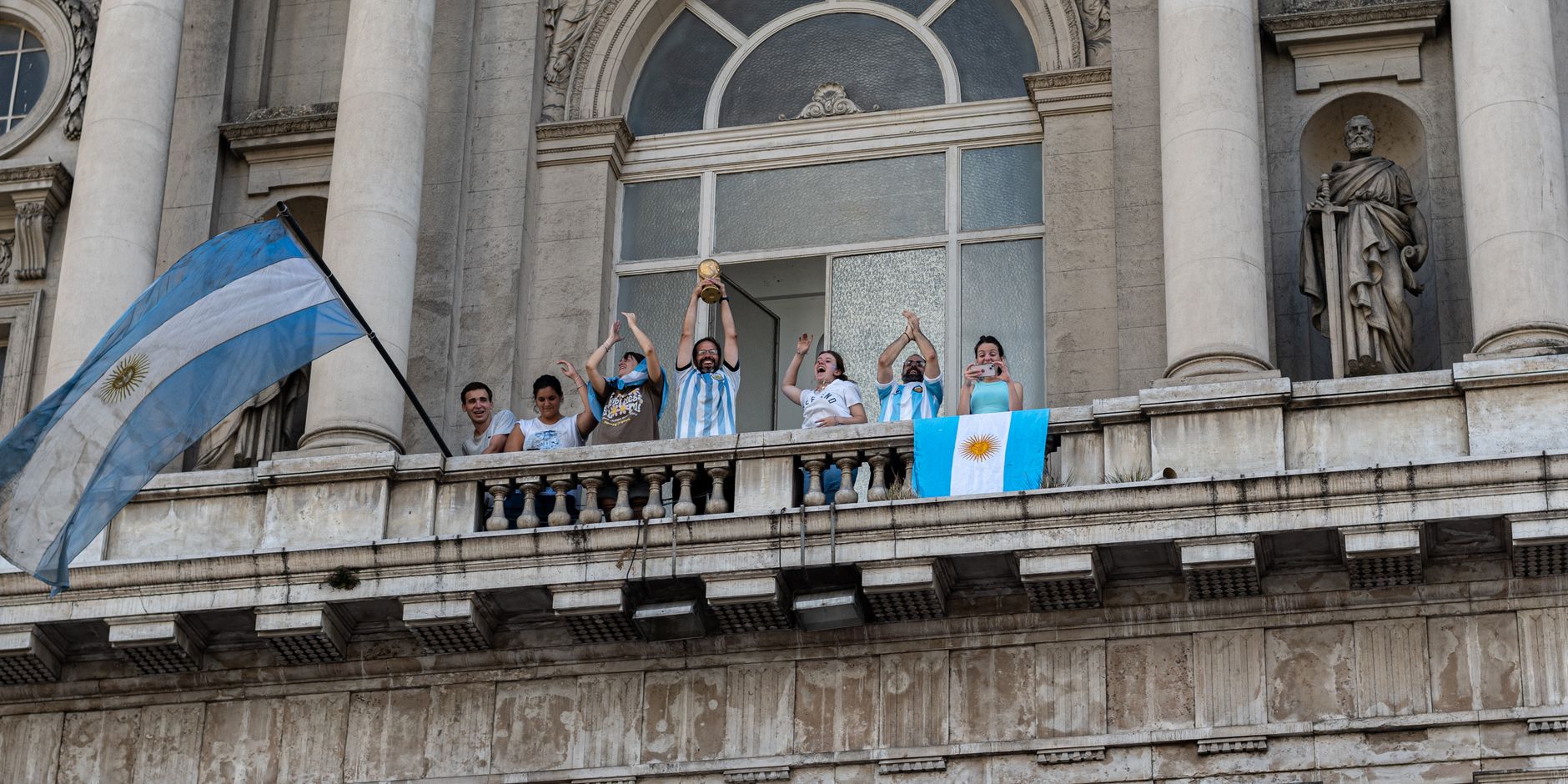
Photo by Fabrizio Velez on Pexels
Atlanta is selling itself as the “soccer city of the South,” and the slogan is not entirely empty. Atlanta United has built a serious football audience, while Mercedes-Benz Stadium provides a modern downtown venue with a retractable roof and established experience hosting major events. Still, tournament football is not won by murals, fireworks or tourism campaigns. It is decided by travel load, tactical discipline and whether a supposedly elite side can handle pressure when the match stops following the script.
Want the practical tournament picture before the marketing gets louder?
The Bottom Line
World Cup Football 2026 is a 48-team tournament across 16 venues in North America, with Atlanta hosting a semifinal and the final scheduled for MetLife Stadium in New Jersey. The scale matters because distance, climate and recovery time will influence performance as much as traditional rankings.
The tournament opens on June 11, 2026, and ends on July 19, 2026. Canada, Mexico and the United States will share hosting duties, giving supporters access to very different football environments, from Mexico City’s altitude to hot and humid American venues and long cross-border travel routes. FIFA has published the core competition details through its official FIFA World Cup 2026 tournament information, while the FIFA World Cup 2026 match schedule remains the appropriate source for confirmed fixtures rather than social-media guesswork.
The 2026 format begins with 12 groups of four teams. The top two teams in each group advance, alongside the eight best third-placed teams, creating a 32-team knockout stage. That is the first major analytical trap: a team may qualify without dominating its group, while another can collect a respectable total and still face a complicated third-place comparison. For match predictions, group context must be read alongside goal difference, opponent strength and remaining rest.
Key tournament facts
- Hosts: Canada, Mexico and the United States
- Opening match: June 11, 2026
- Final: July 19, 2026
- Teams: 48
- Matches: 104
- Host cities: 16
- Atlanta venue: Mercedes-Benz Stadium
- Atlanta role: semifinal host
[Internal Link: complete World Cup Football 2026 schedule guide]
What Players Actually See
Players will not experience one unified “North American tournament.” They will experience a patchwork of travel, weather, pitch conditions, stadium roofs and recovery windows. A group-stage match in Mexico City is a different physical assignment from one in Atlanta, Dallas or Vancouver, even before tactical quality enters the equation.
For analysts, this means the same team profile can produce different outcomes from one venue to another. A high-pressing team may look excellent when its recovery period is generous, then lose intensity after a short turnaround and a long flight. A possession-heavy team may control the ball in a cool stadium but struggle when heat and humidity reduce repeated sprint capacity. These are not decorative details. They alter shot volume, pressing success and late-match substitutions.
Mercedes-Benz Stadium gives Atlanta a particular advantage as a host venue because its roof can moderate extreme conditions. That does not make Atlanta neutral. Crowd energy, unfamiliar surroundings and knockout pressure still matter, especially when a semifinal offers no second chance. Atlanta’s football identity, shaped partly by Atlanta United and its supporters, may create a strong local atmosphere, but analysts should separate emotional noise from measurable team performance.
“The FIFA World Cup 26 will be the biggest and most inclusive FIFA World Cup in history,” FIFA has stated in its official tournament communications.
The claim is accurate in scale, but “bigger” does not automatically mean better value for a bettor. More matches mean more data, yet they also mean more uncertainty, more injuries and more markets built around incomplete information.

Photo by K on Pexels
The 3 Things That Matter Most
The tournament’s useful signals are not mysterious. They are simply less glamorous than picking a famous badge and hoping the price behaves.
1. Rest and travel
Teams crossing multiple time zones may show the effect late in matches rather than from kickoff. Track arrival dates, previous venue and recovery time, especially during the knockout rounds. A two-day rest difference can matter more than a small gap in FIFA ranking points when both squads are technically strong.
2. Squad depth
The 48-team format increases the number of matches and expands the chance that rotation decides a result. Watch substitutes, not just starting elevens. A side with two credible full-backs and a reliable defensive midfielder can survive tournament congestion better than a top-heavy team built around 13 or 14 trusted players.
3. Market timing
Early odds often reflect reputation, qualifying history and public sentiment. Later prices incorporate confirmed lineups, injuries, weather and tactical news. World Cup Hub’s match coverage should therefore be used as a research layer: compare team tendencies, player statistics and tactical matchups instead of treating any prediction as a guarantee.
A practical pre-match checklist looks like this:
- Confirm the venue, kickoff time and local weather.
- Compare rest days and recent travel distance.
- Check expected lineups and unavailable players.
- Review set-piece strength and defensive transition numbers.
- Compare the market price with your own estimated probability.
- Set a fixed stake before emotions enter the room.
If your estimated win probability is 55%, the fair decimal price is approximately 1.82 before margin. A bookmaker offering 1.65 is not giving you a bargain simply because the team is popular. The arithmetic remains unimpressed by a famous shirt.
Ready to compare tactics, player form and tournament conditions?
[Internal Link: World Cup team tactics and formation analysis]
Edge Cases & Gotchas
The expanded competition creates several situations that can mislead even experienced followers. The first is the third-place qualification system. Because eight of the 12 third-placed teams advance, a team may play cautiously in its final group match once its position looks sufficient. That can make live markets appear irrational when the underlying incentive has changed from winning to avoiding defeat.
The second is the host-city illusion. A venue being associated with football culture does not mean every match there will produce attacking football. Atlanta may offer an energetic crowd and a high-quality stadium, but the teams selected for a semifinal will bring their own tempo, defensive structures and risk tolerance. A promotional claim about “passion” is not a statistical input.
The third is cross-border logistics. Canada, Mexico and the United States have different entry rules, transport systems, climates and local regulations. Supporters should confirm passport requirements, accommodation cancellation terms and stadium policies directly with official sources. The U.S. Department of State travel guidance, Government of Canada travel advice, and Mexico’s official tourism information are more useful than a viral post promising that every route will be effortless.
For betting, jurisdiction is another serious edge case. Legal availability, age rules, advertising restrictions and payment methods differ by location. Never assume that an account or market permitted in one U.S. state is automatically available in another country or state. Use licensed operators where betting is legal, read the terms, and treat gambling as entertainment rather than income.

Photo by https://kaboompics.com/ on Pexels
A less obvious issue is data quality. A player’s tournament average can be distorted by one weak opponent or a short substitute appearance, while a team’s goal tally can conceal low shot quality. In my own review of match models, venue-adjusted inputs became more stable when recent performance was weighted across five matches rather than one headline result; that does not predict the future perfectly, but it reduces the lazy overreaction that markets invite.
Common errors to avoid
- Treating FIFA ranking as a complete team-strength model
- Ignoring rest days between group and knockout matches
- Comparing raw goals without opponent adjustment
- Betting before lineups when tactical roles are uncertain
- Assuming a roof eliminates every climate or travel effect
- Chasing losses after a surprising result
- Confusing a tip with a guaranteed outcome
Verdict
World Cup Football 2026 will be larger, longer and harder to read than previous editions because 48 teams, 104 matches and 16 venues create more moving parts. Atlanta and Mercedes-Benz Stadium will be central to the event’s identity, particularly as a semifinal host, but the strongest analysis will look beyond the promotional surface. Travel, rest, squad depth, venue conditions, incentive changes and price discipline are the real levers.
World Cup Hub is best used as a daily research companion for match predictions, tactical breakdowns, player statistics and tournament news. The sensible approach is to build a view, compare it with the market, stake modestly and accept that uncertainty is part of football. If you cannot afford to lose the money, do not place the bet. No amount of stadium lighting changes that rule.
Want to follow the 2026 tournament with sharper, evidence-based coverage?
Frequently Asked Questions
Q: What is World Cup Football 2026?
A: World Cup Football 2026 is FIFA’s men’s international tournament featuring 48 teams across Canada, Mexico and the United States. It will run from June 11 to July 19, 2026, with 104 matches played in 16 host cities. The competition uses 12 groups of four, followed by a 32-team knockout stage that includes eight best third-placed teams.
Q: How many teams will play in the 2026 FIFA World Cup?
A: The 2026 FIFA World Cup will feature 48 teams, an increase from the 32-team format used from 1998 through 2022. The teams will be divided into 12 groups of four, and the top two from each group plus eight third-placed teams will advance. This creates 104 total matches, making the tournament substantially longer than earlier editions.
Q: Which city will host a World Cup 2026 semifinal?
A: Atlanta will host a World Cup 2026 semifinal at Mercedes-Benz Stadium. The stadium is home to Atlanta United and is known for its retractable roof, central location and large match-event capacity. Supporters should still verify the final fixture, kickoff time and ticketing instructions through FIFA and official Atlanta World Cup channels.
Q: What is the difference between the World Cup 2026 group stage and knockout stage?
A: The group stage guarantees each team three matches, while the knockout stage eliminates a team after one loss. Twelve groups of four produce 32 knockout qualifiers: 24 teams qualify automatically through first and second place, and eight qualify as the best third-placed sides. Knockout matches require extra time and penalties if the score remains level after regulation.
Q: How should I analyse World Cup Football 2026 matches?
A: Analyse confirmed lineups, rest days, travel, venue conditions, tactical matchups and current market prices before deciding whether a wager has value. Start with team performance over several matches instead of relying on one result or a famous player’s reputation. World Cup Hub can support that process with predictions, tactical analysis and player statistics, but no analysis removes match uncertainty.
Q: What should I do if my World Cup betting account or payment fails?
A: Check the operator’s licensing status, identity-verification request, payment limits and local eligibility rules before contacting customer support. A failed deposit may result from a blocked payment method, incomplete KYC information, location restrictions or a transaction limit rather than a technical error. Do not open duplicate accounts or chase the problem with repeated deposits; save the error message and use the operator’s official support channel.
Q: Is betting on World Cup Football 2026 worth it?
A: Betting is only worth considering as paid entertainment when you can afford the full stake and understand the odds. A positive expected-value idea can still lose, and tournament markets often include bookmaker margin that reduces long-term returns. Set a budget, use fixed stakes, avoid chasing losses and follow local laws; if gambling stops being enjoyable or controlled, stop and seek responsible-gambling support.
The final details will change as qualification, squad selection and official scheduling develop. Keep the [Internal Link: World Cup 2026 news and updates] nearby, compare information with official FIFA sources, and do not let a polished campaign turn uncertainty into false confidence.
For continued match analysis and daily tournament coverage, use World Cup Hub as one research source rather than a substitute for judgment.