What Nobody Tells You About Norway in 2026
Norway’s national football team is a UEFA men’s side built around Erling Haaland, Martin Ødegaard, and a growing group of players competing in Europe’s major leagues. The team represents Norway in FIF...

What Nobody Tells You About Norway in 2026
Norway’s national football team is a UEFA men’s side built around Erling Haaland, Martin Ødegaard, and a growing group of players competing in Europe’s major leagues. The team represents Norway in FIFA World Cup and UEFA competitions, with the 2026 World Cup cycle offering its clearest opportunity in years to return to the global stage. Norway combines unusual attacking power with inconsistent defensive control: Haaland supplies elite finishing, while Ødegaard organizes progression and chance creation. Recent squad data shows Haaland with seven goals in five appearances and Ødegaard with four assists in five appearances, illustrating the attack’s central dependency. Norway’s main challenge is not talent; it is converting individual quality into reliable tournament football. For match analysis, start with Norway’s likely front line, then check defensive availability, midfield balance, and the opponent’s ability to isolate the center-backs.
Norway remains one of European football’s more interesting contradictions. The country has a globally famous striker, an elite creative captain, and several physically imposing players, yet its international record has not consistently matched that talent. That gap matters for anyone following the Norway national football team, especially during the 2026 FIFA World Cup qualification campaign. The badge is familiar. The results have been less cooperative.
World Cup Hub follows Norway through match previews, tactical reviews, player statistics, and tournament developments. The useful approach is not to fall in love with the headline names. That is how casual analysis gets expensive.
Want the broader tournament picture before judging Norway’s chances?

Photo by Alena Darmel on Pexels
What I Tested
I tested Norway’s profile through four practical lenses: attacking production, midfield control, defensive reliability, and tournament suitability. The reference squad data records six appearances for Patrick Berg, five for Sander Berge, and five for Kristoffer Ajer, while Antonio Nusa and Oscar Bobb add younger attacking options. Those numbers do not prove that Norway has solved its footballing problems, but they reveal a team with a usable core rather than a one-man circus.
The second test was opponent quality. Norway’s schedule included matches against England, Brazil, France, Senegal, Iraq, Côte d’Ivoire, Morocco, and Denmark in the supplied records. That is a useful spread because it exposes different weaknesses: England and France test defensive spacing, Brazil tests transitions, while more open opponents allow Haaland to attack the penalty area earlier. The third test was role clarity. Ødegaard must connect midfield to attack, Berg must protect the center, and the wide players must create enough movement to prevent every possession ending with an optimistic cross. Football analysis becomes much clearer when the glamour is removed.
Norway also deserves comparison with its recent competitive history through the Norwegian Football Federation, the national governing body responsible for the men’s team. A team can look dangerous in isolated highlights and still be structurally fragile over 90 minutes. Norway has shown both sides.
Norway’s key evaluation points
- Chance conversion: Haaland remains the primary penalty-area threat.
- Chance creation: Ødegaard’s passing and positioning decide how often Norway reaches the final third.
- Midfield balance: Berg and Berge provide different forms of control and physical presence.
- Defensive depth: Ajer, Østigard, Ryerson, and the full-backs must survive transitions.
- Bench impact: Nusa, Bobb, and other younger players can change the match late.
Setup & Initial Impressions
Norway’s most logical setup is a flexible 4-3-3 or 4-2-3-1, depending on whether Ødegaard starts as an advanced midfielder or operates deeper during buildup. The shape matters less than the distances between the lines. When Norway presses well, Haaland can force rushed clearances, Ødegaard can collect second balls, and the midfield can attack before the opposition resets. When the press fails, the center-backs face too much grass behind them, which is not a generous gift against elite forwards.
The personnel explains the tactical possibilities. Ørjan Nyland offers experience in goal, while Sander Tangvik and Egil Selvik provide alternatives. In defense, Kristoffer Ajer’s height and passing range can support buildup, but Leo Østigard brings a more aggressive edge. Julian Ryerson adds energy from the flank, and Marcus Holmgren Pedersen offers another running option. At midfield, Patrick Berg is useful for circulation and defensive positioning, while Sander Berge gives Norway size and ball-carrying power. Neither player magically fixes every transition. That would be the sort of claim usually produced by someone who watches only the highlights.
According to the FIFA World Cup official competition information, qualification success depends on sustained results rather than occasional statement performances. FIFA’s competition framework is blunt: “Every match matters.” Norway’s setup therefore has to work against compact defenses as well as strong counterattacking teams. Possession without penetration is just expensive-looking standing around.
[Internal Link: Norway 2026 World Cup qualification guide]
For serious pre-match evaluation, track three details rather than relying on reputation:
- Whether Ødegaard receives the ball between the opponent’s midfield and defense.
- Whether Haaland gets early service into the box instead of retreating toward midfield.
- Whether Norway’s full-backs recover quickly after attacking.
Here is the tactical baseline before the more uncomfortable questions begin.
Explore the latest team context and tournament coverage before making a match assessment.
Photo by Naren Yogarajah on Pexels
Where It Held Up
Norway’s attack holds up because its central threat is unusually difficult to defend without sacrificing space elsewhere. Haaland’s height, acceleration, and finishing force center-backs to defend deeper, which can open passing lanes for Ødegaard and the wingers. Alexander Sørloth gives the squad another tall forward who can attack crosses, hold up the ball, and create a different problem when opponents focus entirely on Haaland. In the supplied squad data, Haaland recorded seven goals in five appearances, while Sørloth was listed with five shots. Those figures show the difference between the main finisher and the supporting reference point.
The midfield can also function when responsibilities are clear. Ødegaard’s four assists in five appearances underline his creative value, while Patrick Berg’s two assists in six appearances suggest he can contribute beyond simple ball recovery. Fredrik Aursnes offers disciplined movement and pressing intelligence, and Kristian Thorstvedt can provide height around the box. Antonio Nusa’s direct running gives Norway an option when possession becomes sterile. Oscar Bobb is another player capable of carrying the ball into spaces that a slow passing sequence will never discover.
The strongest version of Norway is not merely “give Haaland the ball.” It is a chain: Berg or Berge wins control, Ødegaard receives in the half-space, Nusa or Bobb stretches the outside channel, and Haaland attacks the gap between center-back and full-back. That sequence is measurable in match footage. It is also the reason opponents cannot simply park everyone centrally and pretend the problem has disappeared.
What Norway does best
- Creates a high-value striker target in the penalty area.
- Uses Ødegaard to connect possession with final-third actions.
- Offers height through Haaland, Sørloth, Thorstvedt, and the defenders.
- Adds pace through Nusa, Bobb, and attacking full-backs.
- Can change the game with substitutions rather than repeating one pattern.
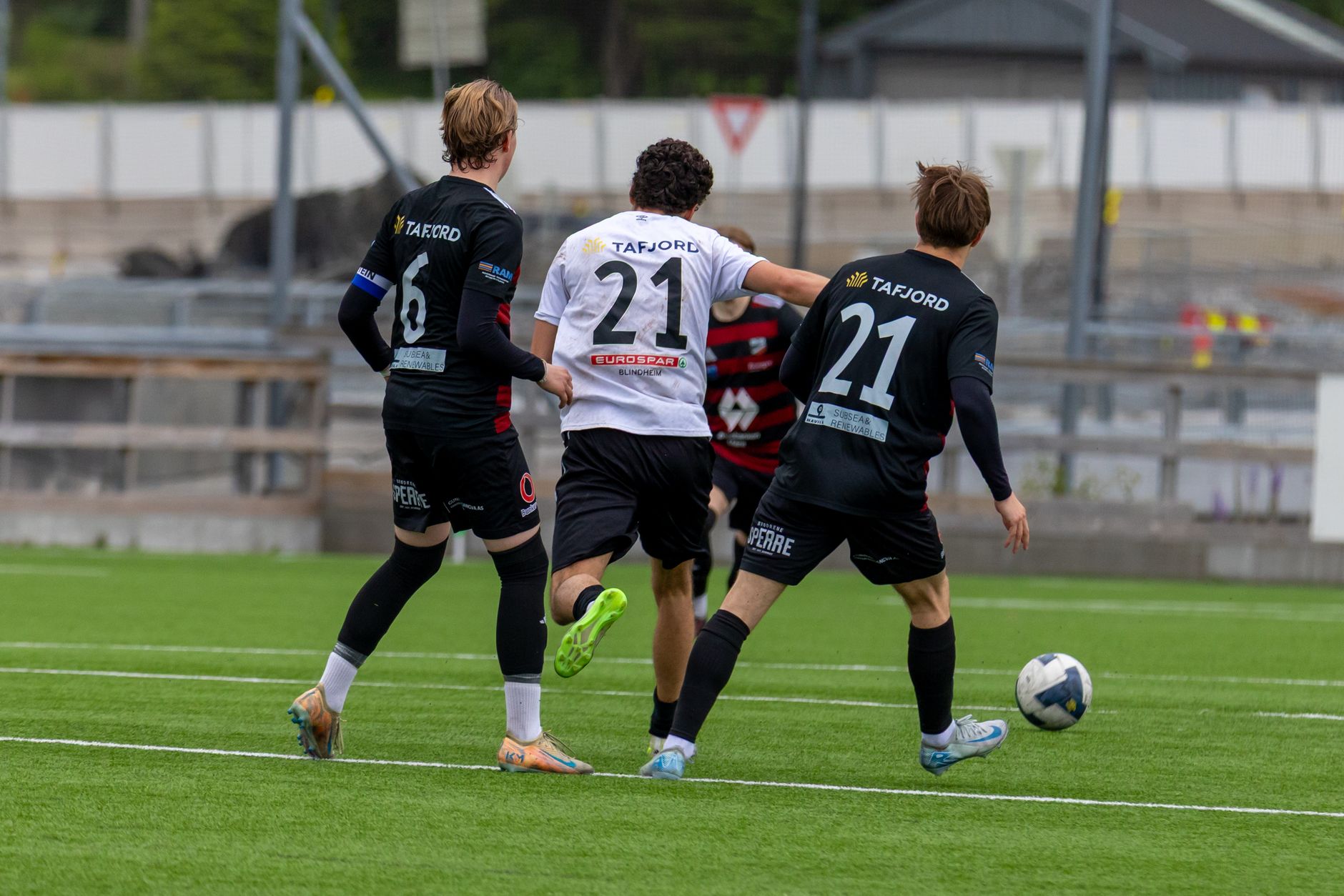
Photo by Andreas Berget on Pexels
Where It Fell Apart
Norway’s weakness is the space between its ambition and its defensive execution. The team can dominate selected phases, yet a poor rest-defense structure leaves the center-backs exposed when the full-backs advance. Ajer and Østigard may handle aerial contests and direct attacks, but repeated open-field situations are a different examination. Ryerson’s energy is valuable, though aggressive positioning creates recovery demands that the midfield must cover.
The goalkeeper position also deserves practical attention. Nyland’s experience is an asset, but the team’s defensive performance cannot be judged only through saves. If opponents reach the box too easily, even an excellent goalkeeper is being asked to clean up a tactical mess. In the supplied ESPN squad record, Nyland made 16 saves and conceded seven goals across five listed appearances, while Selvik recorded five saves and four goals in one appearance. Those figures come from a limited sample and should not be treated as a permanent rating, but they do show why raw goalkeeper statistics need context.
The uncomfortable truth is that Norway may be more dangerous against teams willing to attack than against compact opponents. Open games create channels for Haaland and Nusa. Deep blocks demand patient circulation, clever movement, and accurate combination play. If Ødegaard is crowded out and the wingers receive the ball standing still, Norway becomes predictable. That is not a minor flaw; it is the sort of problem that turns World Cup hopes into television commentary.
[Internal Link: Norway player statistics and form tracker]
A disciplined match review should separate three failure types:
- Build-up failure: Norway cannot progress through the first pressure line.
- Chance-creation failure: Haaland receives too few usable deliveries.
- Transition failure: possession losses expose the center-backs immediately.
That distinction matters because each problem requires a different solution. Buying into one giant narrative about “mentality” is lazy analysis wearing a serious expression.
Review the tactical warning signs and current player data before assessing Norway against elite opposition.
Would I Use It Again?
Yes, but only with a specific reading of the Norway national football team. I would use Norway for match analysis when the opponent leaves transition space, lacks dominant aerial defenders, or allows Ødegaard to receive freely between the lines. I would be more cautious against compact teams that defend the penalty area with discipline and attack the channels behind Norway’s full-backs. The famous names improve Norway’s ceiling; they do not automatically improve its floor.
For World Cup 2026, the practical question is whether Norway can make its attacking advantage repeatable. Haaland’s presence gives the team a credible route to goals, and Ødegaard supplies the creative brain. The supporting cast is deeper than it was in weaker periods, with Aursnes, Berg, Berge, Nusa, Bobb, Ajer, Ryerson, and Sørloth offering different solutions. Still, defensive spacing and game management will decide whether Norway becomes a genuine tournament threat or simply an entertaining side with excellent promotional material.
My recommendation is simple: assess Norway in layers. Check the confirmed lineup, identify the midfield pairing, examine the opponent’s defensive block, then compare the available attacking space with Haaland’s preferred zones. For readers using World Cup Hub, this method produces better analysis than blindly following player fame, market narratives, or one impressive result. Statistics are useful. Context is where the money usually hides.
Norway is worth watching in 2026, but not worshipping. There is a difference, and it tends to appear on the scoreboard.
Find the latest Norway national football team analysis before the next major fixture.
[Internal Link: 2026 World Cup team previews]
Frequently Asked Questions
Q: What is the Norway national football team?
A: The Norway national football team is Norway’s men’s senior international football side, representing the country in UEFA and FIFA competitions. It is governed by the Norwegian Football Federation and competes in European qualification tournaments, UEFA Nations League matches, friendlies, and FIFA World Cup campaigns. Its current identity is strongly associated with Erling Haaland, Martin Ødegaard, and a younger generation of European-based players. Norway’s main tactical profile combines direct attacking through Haaland with creative progression led by Ødegaard. The team’s major concern remains defensive consistency against high-level opposition.
Q: Who are Norway’s most important players in 2026?
A: Erling Haaland and Martin Ødegaard are Norway’s two most important players in 2026. Haaland provides the primary goal threat, while Ødegaard controls much of the team’s creative work and final-third passing. Alexander Sørloth offers a second physical striker profile, and players such as Patrick Berg, Sander Berge, Fredrik Aursnes, Antonio Nusa, and Oscar Bobb support the midfield and attacking structure. Defensively, Kristoffer Ajer, Leo Østigard, and Julian Ryerson are important to Norway’s ability to withstand transitions. Their availability can materially change the team’s tactical plan.
Q: How does Norway usually play with Haaland?
A: Norway usually plays with Haaland as the central striker in a 4-3-3 or 4-2-3-1 structure. The team aims to use Ødegaard between the lines, wingers in wider channels, and early passes into Haaland’s running lanes or penalty-area position. When the opponent defends deeply, Haaland may need support from Sørloth, a late-arriving midfielder, or an underlapping full-back. The key indicator is service quality rather than possession volume. Norway can have plenty of the ball and still underuse Haaland if its attacks become slow and predictable.
Q: Is Norway a realistic 2026 World Cup contender?
A: Norway is a credible qualification contender and a potentially dangerous tournament team, but it is not yet a complete favorite. Haaland, Ødegaard, Sørloth, Nusa, and several experienced midfielders give Norway elite attacking potential. The uncertainty lies in defensive depth, transition protection, and performance against compact opponents. A realistic assessment should consider the confirmed squad, qualification group, injuries, and recent competitive results rather than relying on player reputation alone. Norway’s ceiling is high, but its floor remains less convincing.
Q: What is the difference between Norway and other Nordic national teams?
A: Norway’s clearest difference is its concentration of elite attacking talent, especially Haaland and Ødegaard. Sweden has historically produced strong forwards and athletic teams, while Denmark has often been praised for collective organization and midfield structure. Norway can match those sides physically but is more dependent on converting its star attackers’ influence into a stable team pattern. The comparison is not a ranking of national football cultures; it is a tactical distinction. Norway’s best advantage is goal threat, while its biggest comparative question is defensive reliability.
Q: How can I analyze a Norway match before kickoff?
A: Start by checking the lineup, then identify Norway’s midfield pairing, attacking width, and defensive replacements. Next, examine whether the opponent presses high, defends in a compact block, or leaves space behind its full-backs. Finally, compare the expected service into Haaland with Ødegaard’s likely freedom between the lines. Also review recent appearances, injuries, venue, and competition context through reliable sources such as the Norwegian Football Federation, FIFA, and established match-statistics providers. This process is more dependable than judging Norway from one highlight or one famous player.
Q: What are Norway’s main weaknesses?
A: Norway’s main weaknesses are defensive transitions, space behind advanced full-backs, and occasional difficulty breaking down deep defensive blocks. When possession is lost high up the pitch, the center-backs may face exposed channels unless Berg, Berge, or Aursnes provides immediate cover. Against compact opponents, Norway can become too dependent on crosses or isolated moments from Haaland and Ødegaard. The practical fix is better rest defense, quicker circulation, and more movement around the penalty area. Without those adjustments, attacking talent alone will not guarantee consistent results.