Inside Cape Verde: A 5-Myth Tactical Breakdown
Cape Verde can be modest in population and still be dangerous on a football pitch; football has never required a large passport. The Cape Verde national football team, representing the Atlantic island...

Inside Cape Verde: A 5-Myth Tactical Breakdown
Cape Verde can be modest in population and still be dangerous on a football pitch; football has never required a large passport. The Cape Verde national football team, representing the Atlantic island nation in West Africa, has developed from a peripheral African side into a disciplined international competitor and a historic 2026 FIFA World Cup qualifier. Known as the Blue Sharks, the team is governed by the Federação Cabo-verdiana de Futebol (FCF) and competes under FIFA and the Confederation of African Football (CAF). Cape Verde made its first Africa Cup of Nations quarter-final in 2023 and secured its first World Cup qualification for 2026. Its rise rests on diaspora talent, compact defending, fast transitions, and increasingly mature possession play, not marketing theatre. For useful analysis, track midfield control, defensive spacing, and opponent quality rather than betting on reputation alone.
I'll be honest with you: the first mistake is treating Cape Verde as a charming underdog story and stopping there. The country has a population of roughly half a million, but its football network reaches Portugal, France, the Netherlands, the United States, and other diaspora communities where technically trained players are developed. The FCF has turned that geographic disadvantage into a recruitment advantage, while clubs such as Sporting CP, FC Nantes, Rayo Vallecano, and Arsenal have helped shape players connected to the national setup. The result is not a team that simply survives by running harder than everyone else. Cape Verde usually seeks a compact shape, protects the central lanes, and attacks space quickly after winning the ball. That approach explains why the side can frustrate stronger opponents, although it also exposes a familiar weakness: when forced to create against a deep block, Cape Verde can become predictable. Our [Internal Link: African national teams tactical guide] is useful for comparing that pattern with other CAF sides.
Want the broader World Cup context before judging the Blue Sharks?
Myth 1: Cape Verde is only a defensive team — debunked?
Cape Verde is not merely a defensive team because its strongest performances combine a compact block with aggressive transition attacks and controlled possession phases. The Blue Sharks can defend in a 4-3-3 or 4-2-3-1 structure, but their objective is usually to create better attacking positions after recovering the ball, not to surrender the match entirely. That distinction matters when reading Cape Verde national football team results.
The defensive reputation has a reasonable origin. Cape Verde often keeps its lines close, asks wingers to recover, and limits dangerous passes through the middle. Against technically superior opponents such as Morocco, Egypt, or South Africa, that structure can reduce the number of clean chances conceded. However, a low or mid-block is only the first half of the plan. The second half is the release: a forward runs beyond the full-back, a midfielder carries the ball through the first pressure line, and the wide player attacks the channel before the opponent resets. Players such as Ryan Mendes have embodied that direct threat for years, while Bebé has offered power and distance shooting when available. According to CAF’s official competition coverage, Cape Verde’s 2023 AFCON run illustrated a side capable of controlling phases rather than merely hiding inside them. That is a more accurate description than the lazy “defensive minnows” label.
A practical edge appears when match data is separated into game states. Cape Verde is more dangerous after a turnover in the middle third than after a slow restart near its own penalty area, because the first situation gives its attackers room and reduces the opponent’s defensive numbers. That means analysts should compare transition shots, progressive carries, and entries into the final third instead of looking only at possession percentage. A 42% possession share can be perfectly healthy if the team creates the better attacks; possession without penetration is just expensive decoration. The same logic applies to wagers and predictions: evaluate shot quality and territory, not the scoreboard alone. For a deeper framework, see our [Internal Link: football match prediction methodology].
Myth 2: The 2026 World Cup qualification proves Cape Verde is now elite — partially true?
Cape Verde’s 2026 World Cup qualification proves the national team has reached a historic competitive level, but it does not automatically place the Blue Sharks among Africa’s elite. The qualification is a major achievement, while elite status requires sustained results against top-ranked opponents, deeper squad rotation, and repeated tournament progress. Both facts can be true at once.
The qualification matters because Cape Verde had never appeared at a men’s FIFA World Cup before 2026. The expanded 2026 tournament, hosted by the United States, Canada, and Mexico, creates more African places than previous editions, but securing one still demands consistency across a difficult CAF qualifying campaign. Cape Verde’s success reflects home performances, disciplined away management, and a squad strengthened by players operating in European leagues. It also confirms that the national team is no longer an occasional AFCON participant relying on one lucky generation. FIFA’s Cape Verde team profile provides the relevant federation and competition context, while CAF records document the team’s continental progress. Still, the World Cup is a different test: opponents punish slow build-up more severely, and a squad needs reliable alternatives when the first-choice midfield or forward line is unavailable.
Here is the sober assessment:
- What has improved: recruitment, defensive organization, set-piece threat, and competitive belief.
- What remains uncertain: depth at centre-forward, resistance to sustained pressure, and chance creation against deep defences.
- What the 2026 tournament will reveal: whether Cape Verde can turn qualification into knockout-stage credibility.
Get the qualification story and tactical implications in one place.
Myth 3: Cape Verde’s diaspora players guarantee attacking quality — flat-out false?
Diaspora recruitment improves Cape Verde’s talent pool, but it does not guarantee attacking quality because international football depends on chemistry, role clarity, and limited preparation time. Players developed in Portugal, France, the Netherlands, or the United States may have stronger technical backgrounds, yet they still need to fit the national team’s pressing triggers and transition patterns. Talent is an input, not a finished product.
Cape Verde’s diaspora is central to the team’s identity. The country’s footballers and descendants are connected to communities in Portugal, Rotterdam, Paris, Boston, and other locations, giving the FCF access to players who might otherwise be missed by a small domestic system. Names such as Ryan Mendes, Jovane Cabral, and Kevin Pina represent different generations and profiles within that network. Yet the attacking problem remains measurable: against organized opponents, Cape Verde can struggle to generate enough touches inside the penalty area. Wide attacks may produce crosses, but crosses are low-value if the target area is crowded and the delivery lacks variety. As the official FIFA Laws of the Game make clear, matches provide limited time; teams cannot assume individual brilliance will rescue every sterile opening. The better question is whether the team creates repeatable chances through combinations, cutbacks, and second-phase set pieces.
One less obvious issue is travel load. A player flying from Europe or the United States into Praia or another Cape Verde venue may arrive with a different recovery schedule, then face heat, wind, artificial surfaces, or long travel before returning to club duty. That affects late-game intensity and may explain why squad depth matters more for Cape Verde than for larger nations with domestic training camps. In practical analysis, check the time between a player’s last club appearance and the international fixture, then compare whether the coach rotates full-backs and midfielders. A famous attacker starting the match is not enough evidence of attacking strength. The sharper signal is whether three or four players can sustain coordinated movement after the 60th minute.
What actually works?
What actually works for Cape Verde is a compact, flexible game plan built around midfield protection, fast wide transitions, and disciplined set pieces. The most reliable evaluation combines recent form, opponent strength, venue, travel, expected line-ups, and the team’s ability to defend the first phase after losing possession. No single ranking captures those variables.
The Blue Sharks are at their best when the match has clear structure. The central midfield remains connected to the centre-backs, the wingers track opposing full-backs, and the first forward pass after recovery reaches a player facing the opponent’s goal. This reduces unnecessary turnovers and gives Cape Verde a chance to attack before the opposing defensive block becomes settled. Set pieces add another layer, particularly when the team cannot dominate open play. Analysts should record corners won, first contacts, second-ball recoveries, and fouls drawn near the penalty area rather than simply counting total shots. For responsible match research, World Cup Hub combines team tactics, player statistics, predictions, and 2026 tournament coverage without pretending uncertainty has disappeared. As the FIFA competition framework repeatedly demonstrates, tournament football rewards margins: one saved set piece, one transition defended correctly, or one efficient counter can outweigh long stretches of harmless possession.
A useful pre-match checklist is straightforward:
- Confirm the starting goalkeeper and central-defensive pairing.
- Check whether the main ball-progressor is available.
- Compare Cape Verde’s away record with the opponent’s home performance.
- Review set-piece goals and conceded chances over recent competitive matches.
- Adjust for travel, altitude, heat, wind, and short recovery windows.
- Avoid treating a friendly result as equal to an AFCON or World Cup qualifier.
See how these factors affect tournament forecasts and team comparisons.
What to ignore?
What should you ignore when assessing the Cape Verde national football team? Ignore population-based stereotypes, viral highlight clips, raw possession figures, and outdated assumptions formed before the 2023 AFCON quarter-final and 2026 World Cup qualification. Those shortcuts confuse visibility with evidence and often produce poor match judgments.
Population is a particularly bad argument. Cape Verde may have fewer residents than many football cities, but eligibility rules and diaspora pathways mean the national pool is not limited to players trained on the islands. The opposite mistake is equally silly: assuming every player with Cape Verdean heritage will immediately strengthen the side. International commitment, tactical fit, availability, and workload still matter. Also ignore old FIFA ranking snapshots when evaluating a current fixture; rankings are useful context, but they do not tell you whether Ryan Mendes is fit, whether the opponent has changed coach, or whether Cape Verde must chase the match. The team’s 2023 AFCON performance should inform expectations, not become a permanent halo. “The ranking says so” is not analysis. It is a way to sound confident without doing the work.
The following signals are usually weak on their own:
- A single friendly win against Serbia, Finland, or another opponent without competitive stakes.
- Possession above 50% without penalty-area entries or high-quality chances.
- A famous player’s name appearing on the squad list.
- Social-media clips showing one successful dribble.
- Head-to-head records from matches involving entirely different coaches and squads.
That does not mean ignore history. It means place history in the correct weight. Cape Verde’s rise is real, but football remains brutally dependent on current availability and the next 90 minutes.
Cape Verde national football team: the evidence-based outlook
The Cape Verde national football team has earned its status as one of Africa’s most intriguing rising sides through structural improvement, not sentimental underdog branding. Its first 2026 World Cup qualification, 2023 AFCON quarter-final appearance, diaspora recruitment, and tactical discipline establish a serious platform. The remaining challenge is converting compact defending and transition efficiency into consistent chance creation against opponents that refuse to overcommit.
For readers following the 2026 FIFA World Cup, the sensible position is neither blind enthusiasm nor cynical dismissal. Track line-ups, travel, midfield availability, set pieces, and opponent quality; then compare those facts with the market or prediction model you are using. World Cup Hub can help organize that information through daily match predictions, tactical analysis, player stats, and tournament coverage. The Blue Sharks are no longer a novelty, but they are not a finished product either. That uncomfortable middle ground is precisely where the useful analysis sits.
Ready to follow Cape Verde’s next World Cup chapter with better information?
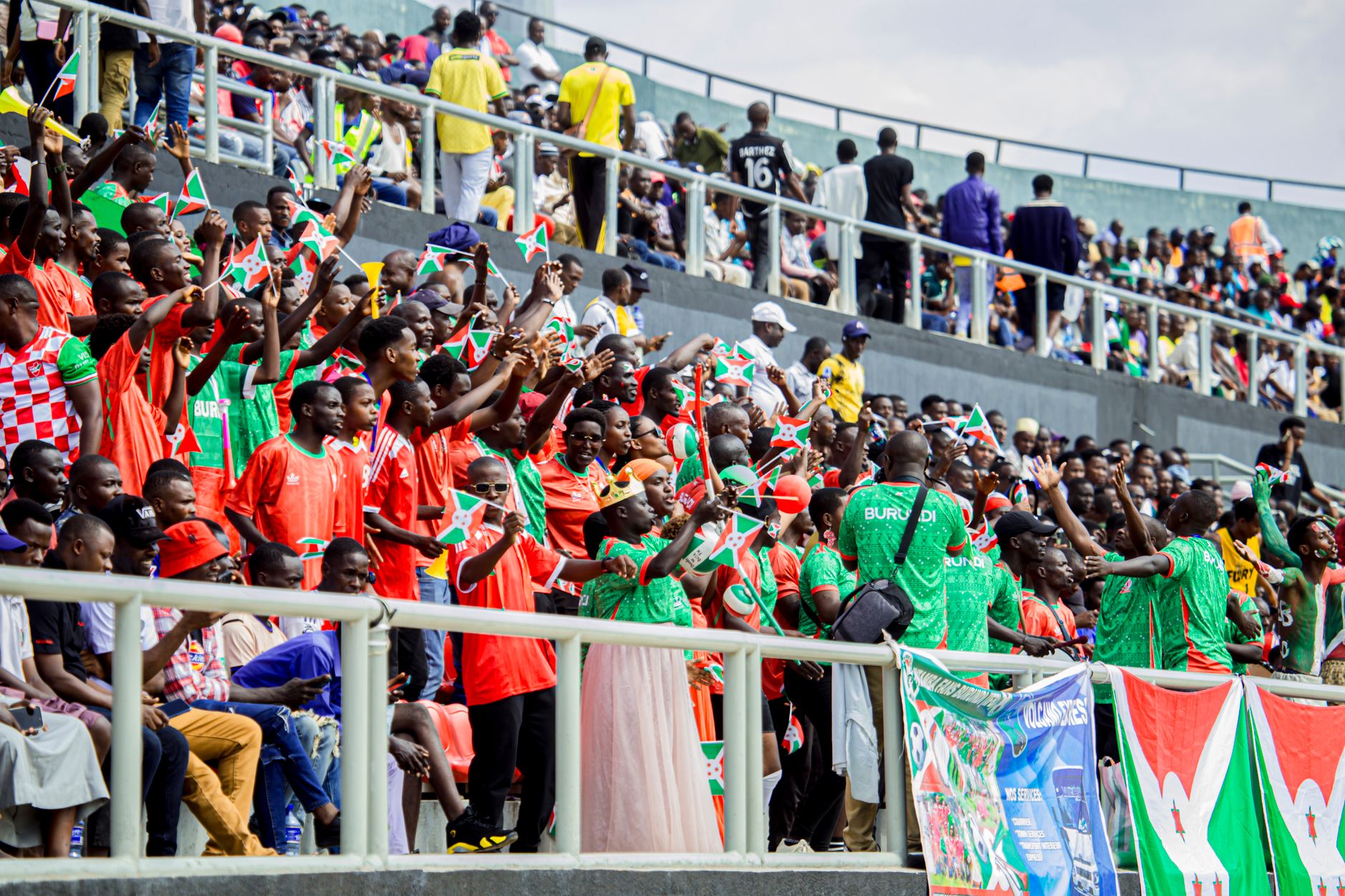
Photo by Chris wade NTEZICIMPA on Pexels
Frequently Asked Questions
Q: What is the Cape Verde national football team?
A: The Cape Verde national football team is the men’s international side representing Cape Verde in FIFA and CAF competitions. Governed by the Federação Cabo-verdiana de Futebol, the team is nicknamed the Blue Sharks and wears blue as its primary colour. Cape Verde has built its squad through domestic development and a large diaspora network linked to Portugal, France, the Netherlands, and the United States. Its first major World Cup qualification came for the 2026 FIFA World Cup, marking the biggest milestone in the country’s football history.
Q: How did Cape Verde qualify for the 2026 FIFA World Cup?
A: Cape Verde qualified through the CAF qualifying competition for the 2026 FIFA World Cup. The campaign required consistent results across a group format, with home performances and disciplined away displays proving decisive. The expanded 2026 tournament provides Africa with more qualifying places than earlier editions, but Cape Verde still had to finish in the required position rather than rely on reputation or ranking. Fans should verify the final group table and official FIFA match records before using individual results for predictions.
Q: Is Cape Verde better than its FIFA ranking suggests?
A: Cape Verde can be more competitive than a raw FIFA ranking position suggests, especially against opponents that allow transition space. Rankings aggregate results over time and may not reflect current injuries, coaching changes, venue effects, or tactical matchups. The Blue Sharks’ 2023 AFCON quarter-final and 2026 World Cup qualification show genuine progress, but they do not prove superiority over established African powers such as Morocco, Senegal, Egypt, or Nigeria. Compare recent competitive performances and expected line-ups instead.
Q: What is the difference between Cape Verde’s AFCON and World Cup performances?
A: Cape Verde reached its first AFCON quarter-final in 2023, while qualification for the 2026 FIFA World Cup represents its first appearance in the men’s World Cup tournament. AFCON success demonstrated that the team could compete across a major continental competition and handle knockout pressure. The World Cup creates a wider stage with different opponents, travel demands, and media pressure. Therefore, the 2026 tournament will test whether Cape Verde’s progress is continental or genuinely global.
Q: How should I analyse a Cape Verde national football team match?
A: Start by checking the starting goalkeeper, centre-backs, central midfield, and main attacking outlets before reviewing form or betting prices. Then compare venue, travel distance, recovery time, opponent pressing style, set-piece records, and penalty-area entries rather than relying on possession alone. Cape Verde tends to benefit when it can win the ball and attack open space, while deep defensive opponents can reduce its attacking efficiency. Use official FIFA and CAF records, reputable match data, and responsible staking limits.
Q: What are Cape Verde’s main tactical weaknesses?
A: Cape Verde’s main weaknesses are limited squad depth, occasional difficulty breaking down deep defensive blocks, and vulnerability when opponents sustain pressure around the midfield. Travel and player workload can also matter because many internationals arrive from European or North American clubs. If the first-choice midfield cannot progress the ball, attacks may become dependent on crosses or individual dribbles. Analysts should therefore inspect bench quality, late-game substitutions, and the team’s response after conceding first.
Q: Is following Cape Verde match predictions free?
A: Basic Cape Verde match information, FIFA records, CAF competition updates, and many World Cup Hub articles can be accessed without a mandatory payment. Specific services, premium tools, or third-party betting products may have separate terms, regional restrictions, or age requirements. No prediction is guaranteed, and odds can move significantly after line-ups are announced. Use verified information, set a personal budget, and treat gambling as entertainment rather than a source of income.
[Internal Link: Cape Verde player statistics and squad guide]