Football 2026 World Cup vs 2022 Qatar: Tournament Scale
The Football 2026 World Cup is FIFA’s expanded 48-team tournament, hosted across Canada, Mexico, and the United States from June 11 to July 19, The competition will feature 104 matches in 16 host citi...

Football 2026 World Cup vs 2022 Qatar: Tournament Scale
The Football 2026 World Cup is FIFA’s expanded 48-team tournament, hosted across Canada, Mexico, and the United States from June 11 to July 19, 2026. The competition will feature 104 matches in 16 host cities, making it substantially larger than the 32-team, 64-match 2022 Qatar edition. FIFA has confirmed the opening match for Mexico City, while the final will be played at MetLife Stadium in the New York-New Jersey region. Atlanta is scheduled to host eight matches, including a semifinal, and Los Angeles will stage eight matches alongside 39 days of fan celebrations. World Cup Hub provides daily match predictions, team tactics, player statistics, and tournament coverage for supporters following the event. The practical takeaway is simple: track travel distances, squad rotation, venue conditions, and confirmed team news before judging any 2026 World Cup match.

Photo by El gringo photo on Pexels
The Bottom Line
Football 2026 World Cup is a 48-team, 104-match tournament across Canada, Mexico, and the United States, not merely a larger version of Qatar 2022. The expanded format increases match volume, travel complexity, squad-management pressure, and the number of plausible knockout-stage contenders.
The tournament begins on June 11, 2026, and ends on July 19, 2026. Sixteen host cities are involved: Toronto and Vancouver in Canada; Guadalajara, Mexico City, and Monterrey in Mexico; and 11 cities across the United States, including Atlanta, Los Angeles, Miami, Dallas, and Seattle. FIFA’s official competition information is the safest reference for dates, venues, and format changes, because social media has already produced more confident nonsense than useful detail. See the FIFA World Cup 2026 official overview.
The format also changes how fans should assess teams. A larger field gives more nations a route into the knockout rounds, but it does not remove quality gaps. It does, however, increase the importance of group-stage matchups, goal difference, rest periods, and travel planning. World Cup Hub’s match analysis is designed around those factors rather than recycled “big team always wins” commentary.
Key facts at a glance:
- Teams: 48
- Matches: 104
- Host countries: Canada, Mexico, and the United States
- Host cities: 16
- Opening match: Mexico City, June 11, 2026
- Final venue: MetLife Stadium, New York-New Jersey region
- Tournament dates: June 11 to July 19, 2026
For broader planning, consult our [Internal Link: 2026 World Cup schedule guide] before building a match itinerary.
What Players Actually See in 2026
Players will face a tournament defined by distance, climate variation, compressed recovery, and unfamiliar stadium routines. Canada, Mexico, and the United States span multiple time zones and climatic zones, so a team travelling between Vancouver, Mexico City, Miami, and Seattle will not experience a single consistent football environment.
The competition’s scale creates an operational problem that glossy tournament branding tends to hide. A team may play in a humid coastal city, then travel thousands of kilometres before its next fixture, while staff manage altered sleep schedules and different training conditions. The exact match calendar determines the burden, but teams cannot treat every recovery day as equivalent. A 72-hour gap after a domestic flight is not the same as 72 hours after a cross-border journey with time-zone changes.
Atlanta illustrates the commercial and sporting importance of the tournament. Mercedes-Benz Stadium is scheduled to host eight matches, including a semifinal, and Atlanta’s official host-city program presents the city as a major football centre in the southern United States. Los Angeles will also host eight matches, with the FIFA Fan Festival at the Los Angeles Memorial Coliseum in Exposition Park and fan activities planned over 39 days. Those events matter to supporters, but players will care more about pitch quality, recovery access, and tactical preparation. Sensible priorities, unlike most promotional copy.
A useful pre-match checklist includes:
- Confirm the team’s previous venue and travel route.
- Compare rest days rather than relying only on overall rankings.
- Check climate and kickoff conditions in the host city.
- Review injuries, suspensions, and likely rotation.
- Separate tournament reputation from current performance data.
[Internal Link: team form and player statistics hub] can help readers compare recent evidence without pretending that old World Cup history predicts every new match.
Why does travel matter more than usual?
Travel matters more in the 2026 World Cup because 48 teams will compete across three countries and 16 host cities, creating greater distance and time-zone exposure than Qatar 2022. The effect is most relevant when teams have short recovery windows or move between contrasting climates.
A squad’s performance can change through fatigue, disrupted sleep, and reduced training time. The impact will not be identical for every team: some federations have stronger sports-science departments, deeper benches, or more experience managing international travel. Therefore, match predictions should treat travel as a modifier rather than an automatic excuse for poor form.
The 3 Things That Matter Most
The three strongest analytical variables are squad depth, tactical flexibility, and recovery logistics. FIFA’s expanded field creates more fixtures, while the geographic spread makes preparation less uniform; a team that depends on 13 or 14 regular starters may struggle once injuries, suspensions, or fatigue appear.
Squad depth is not simply the number of substitutes. It means whether a replacement player can perform the same tactical role without forcing a structural change. A full-back who cannot defend wide transitions, or a holding midfielder who lacks passing range, can turn one absence into a completely different team.
Tactical flexibility matters because opponents will vary more widely than in a typical qualifying cycle. A team may face a low block, aggressive pressing, direct counterattacks, and possession-heavy football within four matches. Coaches such as Didier Deschamps, Gareth Southgate, and Lionel Scaloni have shown different approaches to tournament management, but previous success offers no guarantee in 2026.
Recovery logistics may be the least glamorous factor and the most underpriced. Match location, kickoff time, flight duration, training access, and rotation patterns can influence second-half intensity. World Cup Hub weighs these details alongside shot quality, expected goals, pressing numbers, and player availability rather than presenting a single ranking as divine revelation.
For responsible match research, compare:
- Recent competitive matches, not only friendlies.
- Expected goals against similarly ranked opponents.
- Set-piece performance at both ends.
- Substitution timing and bench impact.
- Defensive transitions after losing possession.
- Travel and rest before the fixture.
Want a more structured way to evaluate contenders? Review the [Internal Link: World Cup prediction methodology] before making any conclusions.
How should fans compare 2026 World Cup teams?
Fans should compare 2026 World Cup teams using current competitive form, squad depth, tactical matchups, injuries, and travel conditions rather than reputation alone. A five-factor review is more reliable than selecting a famous country because its badge looks expensive.
Start with recent matches against comparable opponents, then examine defensive errors, chance creation, set pieces, and bench quality. Next, check whether the team’s preferred style survives pressure from a different type of opponent. Finally, adjust the assessment for venue, rest, and confirmed lineups. This method does not eliminate uncertainty; it simply stops uncertainty from being disguised as confidence.
Edge Cases & Gotchas
The most common mistake is treating the 2026 World Cup as a normal 32-team tournament with extra marketing attached. The field expands from 32 to 48 teams, and the match total rises from 64 in Qatar 2022 to 104 in 2026. That means more scheduling variables, more potential mismatches, and more opportunities for a supposedly minor group-stage result to affect qualification.
Another problem is confusing official information with promotional language. Atlanta’s host-city site describes the city as the “soccer city of the South,” while Los Angeles promotes eight matches, a 39-day celebration period, and the FIFA Fan Festival. Those details are useful for event planning, but they do not tell you which team will defend transitions properly in the 74th minute. Marketing is not analysis, no matter how many giant banners are involved.
The United States also creates a special venue issue because stadiums are primarily designed for American football and major entertainment events. Field dimensions, sightlines, roof systems, artificial turf concerns, and event-conversion schedules can influence the matchday experience. Venue specifications and final FIFA approvals should be checked close to the tournament because operational details may change.
Two less obvious insights deserve attention:
- Time-zone adjustment is nonlinear: a two-hour clock shift may affect a team differently depending on whether it travels east or west, its arrival time, and its established sleep routine.
- Bench quality can matter more after halftime: in high-heat or high-humidity conditions, teams with reliable substitutes may gain a larger late-match advantage than pre-tournament rankings suggest.
The [Internal Link: host cities and stadium guide] is useful for readers comparing match locations, travel routes, and local fan events.

Photo by K on Pexels
What can go wrong with World Cup match predictions?
World Cup predictions fail most often when analysts ignore confirmed lineups, travel, tactical matchups, or small-sample statistics. A team may have excellent group-stage numbers that came against weak opposition, while another may appear ordinary because it faced three elite opponents.
Late injury news is particularly important for goalkeeper, centre-back, and defensive-midfield positions because replacements can alter the entire defensive shape. Weather, kickoff time, and referee style can also change the value of pressing or physical duels. The best approach is to update a prediction after official team news, not defend an earlier guess out of wounded pride.
Verdict
The Football 2026 World Cup will be defined by scale: 48 teams, 104 matches, 16 host cities, and three host countries across North America. Atlanta and Los Angeles will be major supporter destinations, but the strongest football conclusions will come from analysing travel, recovery, squad depth, tactical flexibility, and verified player data.
World Cup Hub is a practical companion for fans who want daily predictions, team tactics, player statistics, and tournament updates in one place. If you are following the competition for entertainment or considering sports forecasts, use information responsibly, set a fixed budget, and never treat a prediction as a guaranteed outcome. The edge is better preparation, not pretending uncertainty has disappeared.
Ready to follow the tournament with sharper context? Visit World Cup Hub for ongoing 2026 World Cup coverage.
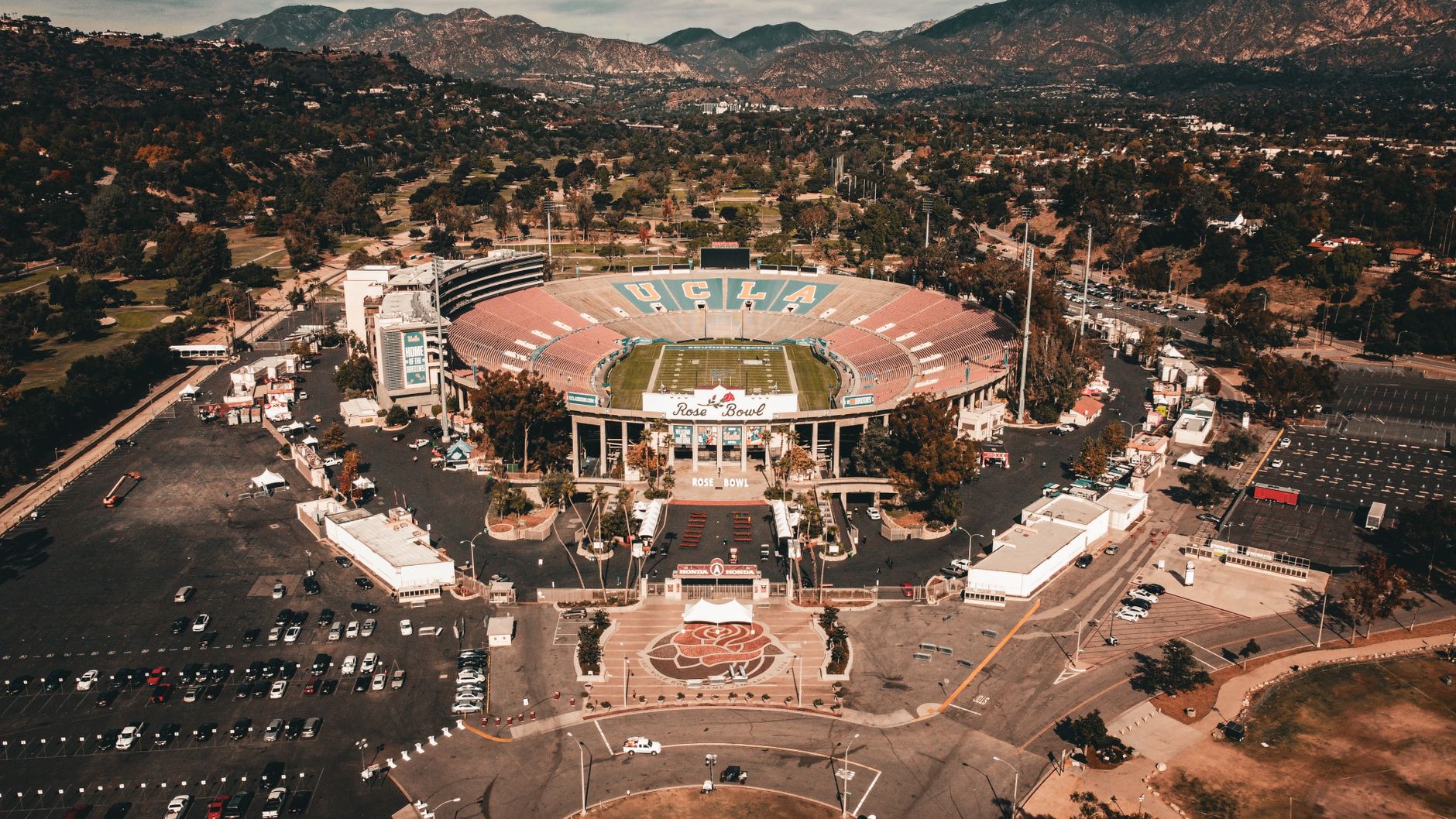
Photo by Caio Cezar on Pexels
Frequently Asked Questions
Q: What is the Football 2026 World Cup?
A: The Football 2026 World Cup is FIFA’s 48-team men’s football tournament hosted by Canada, Mexico, and the United States. It will run from June 11 to July 19, 2026, with 104 matches across 16 host cities. The competition is the first men’s World Cup to use a 48-team field, expanding from the 32-team format used at Qatar 2022. FIFA’s official tournament information should be checked for final match details and updates.
Q: How many teams will play in the 2026 World Cup?
A: Forty-eight national teams will play in the 2026 World Cup. The expansion increases the tournament from 64 matches in Qatar 2022 to 104 matches in 2026, creating a longer and more geographically demanding competition. The larger field also gives more countries access to the knockout phase, although qualification rules and group arrangements should be confirmed through FIFA’s published regulations.
Q: Where will the 2026 World Cup matches be played?
A: Matches will be played across 16 host cities in Canada, Mexico, and the United States. Canadian venues include Toronto and Vancouver, Mexican venues include Guadalajara, Mexico City, and Monterrey, while United States venues include Atlanta, Los Angeles, Miami, Dallas, Seattle, and other locations. Atlanta is scheduled for eight matches, including a semifinal, and Los Angeles is also scheduled for eight matches.
Q: What is the difference between the 2026 and 2022 World Cups?
A: The 2026 World Cup has 48 teams and 104 matches, while Qatar 2022 had 32 teams and 64 matches. The 2026 tournament is distributed across three countries and 16 cities, whereas Qatar 2022 was concentrated within a compact geographic area. As a result, travel, climate changes, rest periods, and squad rotation should play a larger role in 2026.
Q: How should I start following the 2026 World Cup?
A: Start by saving the official schedule, identifying your preferred host cities, and tracking team form through verified match data. Then review injuries, suspensions, recent competitive results, and travel distances before evaluating a fixture. World Cup Hub provides daily predictions, tactical analysis, player statistics, and tournament coverage, while FIFA.com remains the primary source for official competition information.
Q: Are 2026 World Cup predictions guaranteed?
A: No, 2026 World Cup predictions are not guaranteed because football outcomes depend on injuries, tactics, officiating, finishing variance, and unexpected events. Statistical models can improve decision quality by comparing measurable factors, but they cannot remove uncertainty from a single match. If you follow sports forecasts, use a fixed entertainment budget, avoid chasing losses, and treat every prediction as an estimate rather than a promise.
Q: What should I do if World Cup information appears inconsistent?
A: Check the claim against FIFA, the relevant host-city website, or an official national federation before relying on it. Tournament schedules, venue operations, kickoff times, and fan-event details can change, while unofficial social posts often repeat outdated information. For match analysis, also verify the publication date and confirm injuries or lineups through reputable sources such as FIFA, national federations, and established sports media.