Algeria vs Austria: 2026 Standings Drama
Algeria and Austria finished their 2026 FIFA World Cup Group J campaign with a 3-3 draw in Kansas City on June 27, 2026, leaving both nations in the knockout phase while eliminating Iran. Austria and....

Algeria vs Austria: 2026 Standings Drama
Algeria and Austria finished their 2026 FIFA World Cup Group J campaign with a 3-3 draw in Kansas City on June 27, 2026, leaving both nations in the knockout phase while eliminating Iran. Austria and Algeria each entered the final standings with 4 points from three matches, recording one win, one draw, and one defeat, although their exact ranking depended on the group’s tie-break sequence and third-place qualification route. Marko Arnautovic, Marcel Sabitzer, Sasa Kalajdzic, Rafik Belghali, and Riyad Mahrez scored in a frantic finale, with Mahrez striking in stoppage time before Kalajdzic equalized in the 96th minute. Austria advanced to face Spain, while Algeria secured a Round of 32 meeting with Switzerland. The practical takeaway is simple: judge the Algeria national football team vs Austria national football team standings through points, goal difference, and qualification rules—not the result alone.
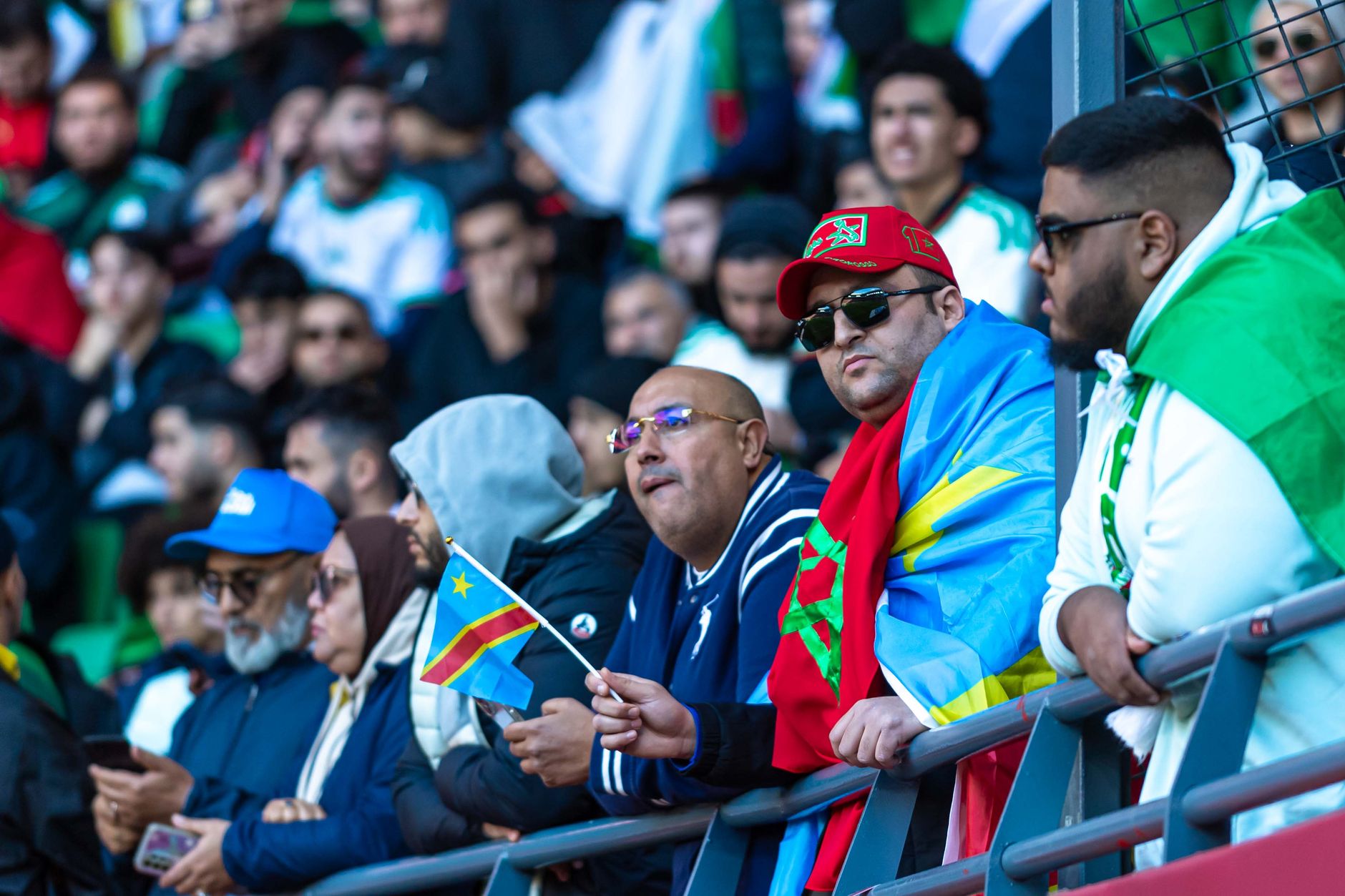
Photo by Guylain Kipoke on Pexels
A draw often looks like football’s polite way of saying nobody had the courage to win. This one was different. The 3-3 result between Algeria and Austria was a tactical negotiation disguised as chaos, because both teams understood that a victory by either side could open the door for Iran to qualify as one of the best third-placed teams. World Cup Hub tracks these details because tournament standings are not decorative tables; they determine who travels on and who packs the bags. The match featured six goals, two late momentum swings, and a final equalizer that changed Austria’s immediate outlook within seconds. According to the FIFA World Cup competition regulations, group-stage progression can involve points, goal difference, goals scored, and wider ranking conditions, so the headline score is only the first layer. If you are comparing Algeria vs Austria for match analysis or responsible pre-match betting research, start with the standings mechanics before admiring the drama.
Want the wider tournament picture before making your own assessment?
Myth 1: Did Algeria and Austria finish level in every meaningful way — debunked?
Algeria and Austria both recorded 4 points from three Group J matches, but equal points do not automatically mean identical standings or identical qualification value. Goal difference, goals scored, head-to-head rules, and the best-third-place ranking structure can separate teams after the points column is level. The 3-3 draw therefore confirmed survival but did not erase the differences between their tournament routes.
The useful distinction is between a match table and a qualification table. Austria finished second behind Argentina and earned a direct knockout pairing with Spain, while Algeria finished third and qualified through the best third-placed teams route before being matched with Switzerland. That difference matters more than the shared 4-point total. Austria’s route was cleaner: second place guaranteed a conventional knockout position. Algeria’s route was more conditional and depended on results elsewhere, particularly the outcome affecting Iran.
The late sequence explains why the standings became so volatile. Arnautovic opened the scoring for Austria, Sabitzer later made it 2-1, and Belghali helped Algeria recover. Mahrez scored twice, including a stoppage-time effort that appeared to put Austria in danger. Kalajdzic’s 96th-minute header then restored Austria’s qualification position. In practical terms, one goal changed the emotional story, but the full table required several tie-break and third-place calculations.
[Internal Link: 2026 World Cup group-stage tie-break rules]
Myth 2: Is a 3-3 draw proof that Algeria and Austria were equally strong — partially true?
The 3-3 score shows that Algeria and Austria were closely matched in this particular match, but it does not prove that their overall tournament performance was identical. Austria’s second-place finish and Algeria’s third-place qualification route indicate different group outcomes, even though both teams ended on 4 points. A single high-scoring draw is evidence of balance, not a complete performance rating.
Austria’s attack created the clearer early platform through Arnautovic and Sabitzer, while Algeria relied heavily on Mahrez’s technical quality and late attacking influence. That contrast is important for anyone studying Algeria national football team vs Austria national football team standings: the points total measures results, whereas shot quality, territory, pressing success, and defensive errors explain how those results happened. The match also exposed both defenses, with six goals and repeated breakdowns during transitions.
A less obvious insight is that the 3-3 result carried asymmetric risk. Austria needed the equalizer because a 3-2 Algeria victory could have eliminated them, while Algeria could still qualify as one of the best third-placed teams despite conceding. That is why the final minutes looked less like ordinary game management and more like two separate survival calculations. The teams shared the same scoreline, but they were not facing the same consequences at every moment.
Consider these practical standings signals:
- Four points can produce first, second, third, or elimination depending on the group structure.
- A late goal can alter knockout pairing, not merely win or lose a match.
- Best-third-place qualification makes results in other groups part of the calculation.
- Goal difference can become decisive when several teams share four points.
See the detailed tournament context before comparing the teams too narrowly.
Myth 3: Was Austria’s 96th-minute equalizer irrelevant because both teams advanced — flat-out false?
Austria’s 96th-minute equalizer was decisive because it protected the team from a possible third-place or elimination scenario and secured a second-place finish behind Argentina. Sasa Kalajdzic’s header did more than complete a 3-3 scoreline: it changed Austria’s qualification security, knockout opponent, and narrative entering the next round. Calling it irrelevant confuses shared progression with identical tournament value.
The match report from ESPN recorded Austria’s 3-3 draw with Algeria and identified the late goals by Mahrez and Kalajdzic. BBC Sport likewise described the equalizer as the moment that confirmed Austria’s place in the last 32. Those reports matter because the table alone cannot show timing, pressure, or the precise qualification state before the final whistle.
The opponent difference was also substantial. Austria’s reward was Spain, the European champions, in Los Angeles. Algeria’s route led to Switzerland in Vancouver, British Columbia. Neither assignment was easy, obviously; World Cup knockout football is not a customer-service survey. However, different group positions produced different tactical and travel problems, which is why the Algeria national football team vs Austria national football team standings should be read alongside the bracket.

Photo by Dextar Studio ™ on Pexels
What actually works when reading Algeria vs Austria standings?
Reading the Algeria vs Austria standings accurately requires combining points, ranking position, goal difference, qualification route, and knockout draw rather than relying on the final score. Austria’s 4 points placed them second behind Argentina, while Algeria’s 4 points placed them third and still allowed advancement as one of the eight best third-placed teams. The correct method is to reconstruct the table first, then assess the match context.
Start with the core data:
- Match: Algeria 3-3 Austria.
- Date: June 27, 2026.
- Venue: Kansas City, Missouri.
- Algeria record: 1 win, 1 draw, 1 defeat, 4 points.
- Austria record: 1 win, 1 draw, 1 defeat, 4 points.
- Group leader: Argentina.
- Austria’s knockout opponent: Spain.
- Algeria’s knockout opponent: Switzerland.
- Eliminated team: Iran.
The second useful method is to separate confirmed facts from inference. A shared points total is confirmed. The precise reason one team ranked above another must be checked against the official table and applicable tie-break rules, not guessed from reputation. The International Football Association Board Laws of the Game also explain why stoppage time can materially extend the match beyond 90 minutes, which matters here because Kalajdzic scored in the 96th minute.
For analysis or responsible wagering, use three checks before reaching a conclusion:
- Verify the latest official standings.
- Check whether goal difference or goals scored separates teams.
- Confirm the knockout bracket and opponent before assessing value.
[Internal Link: Algeria national football team player statistics]
A further information gain comes from treating late goals as table events rather than merely dramatic moments. In a normal league match, a stoppage-time equalizer may turn three points into one. In a World Cup group finale with best-third-place qualification, it can also change which team advances directly, which team relies on external results, and which opponent appears next. That is precisely what happened in Kansas City: Austria’s late goal preserved its second-place position, while Algeria advanced through a more complicated third-place channel.
Want a cleaner way to compare form, position, and knockout risk?
What to ignore when assessing the standings?
Ignore claims that the 3-3 draw alone proves Algeria was above Austria, that both teams had the same tournament route, or that the final equalizer had no ranking consequence. Those statements flatten a multi-layered qualification system into one noisy scoreline. They are attractive because they are simple, and simplicity is often where bad football analysis goes to hide.
Also ignore outdated tables copied before the final whistle. The Algeria national football team vs Austria national football team standings changed during stoppage time, and any preview table showing a different qualification state is historical rather than current. This is a specific operational point for readers following live markets: refresh the official competition page after a late goal, because bookmaker settlement information, bracket updates, and media reports may not synchronize instantly.
Do not overrate individual stars either. Mahrez scored twice and became the defining Algerian figure in the match, while Kalajdzic delivered Austria’s rescue moment. Yet Arnautovic, Sabitzer, Belghali, defensive midfielders, full-backs, and goalkeeper actions shaped the earlier phases. A proper comparison should record goals, assists, cards, substitutions, possession, shots, and defensive interventions where verified data is available.
Use this evidence hierarchy:
- Official FIFA standings and competition regulations.
- Verified match reports from ESPN and BBC Sport.
- Event data from established statistical providers.
- Tactical interpretation based on the full 90-plus minutes.
- Opinions, social posts, and dramatic headlines last.

Photo by Vlad Vasnetsov on Pexels
The contrarian conclusion is straightforward: Algeria’s third-place qualification was not a failure, and Austria’s second-place finish was not proof of dominance. Both teams survived with 4 points, but they carried different levels of certainty into the next round. Austria earned a direct second-place path to Spain; Algeria required the best-third-place mechanism before meeting Switzerland. World Cup Hub’s useful edge is therefore not predicting which badge looks bigger, but identifying exactly what the table says and what it does not.
For more match-by-match context, review our [Internal Link: World Cup knockout-stage analysis] and [Internal Link: live standings and qualification tracker]. Responsible readers should also remember that football outcomes remain uncertain, and any betting activity should stay within legal limits and a fixed personal budget. No late equalizer, famous captain, or polished odds page changes that basic rule.
The final verdict is that Algeria and Austria shared 4 points and produced a memorable 3-3 draw, but the standings gave Austria second place and Algeria third place with advancement through the best-third-place route. The decisive details were the group ranking, the 96th-minute Kalajdzic equalizer, and the different knockout opponents awaiting each team. Anyone researching Algeria national football team vs Austria national football team standings should save the final table, check the tie-break context, and avoid treating a scoreline as the entire story.
Ready to follow the next World Cup standings update with better context?
Frequently Asked Questions
Q: What are the Algeria national football team vs Austria national football team standings?
A: Algeria and Austria each finished the reported Group J campaign with 4 points from three matches. Austria ranked second behind Argentina, while Algeria ranked third and advanced as one of the eight best third-placed teams. Both records were listed as one win, one draw, and one defeat, but their qualification routes were different.
Q: What was the final Algeria vs Austria score?
A: Algeria drew 3-3 with Austria on June 27, 2026, in Kansas City. Rafik Belghali and Riyad Mahrez scored for Algeria, with Mahrez scoring twice, while Marko Arnautovic, Marcel Sabitzer, and Sasa Kalajdzic scored for Austria. Kalajdzic’s 96th-minute header completed the decisive late equalizer.
Q: How did Algeria and Austria both qualify after drawing?
A: Austria advanced by finishing second in Group J, while Algeria qualified as one of the best third-placed teams. The result eliminated Iran because an Algeria or Austria victory would have changed the qualification calculation. Points alone were not enough; the wider group table and third-place rankings also mattered.
Q: What was the difference between Algeria’s and Austria’s knockout paths?
A: Austria faced Spain, while Algeria faced Switzerland in the Round of 32. Austria entered that stage as Group J runner-up, giving the team a direct second-place route. Algeria reached the knockout phase through the best-third-place system, so its position and opponent reflected a less direct qualification path.
Q: Why was Sasa Kalajdzic’s late goal important?
A: Kalajdzic’s 96th-minute equalizer protected Austria’s qualification position and confirmed its place in the last 32. Before the goal, Algeria’s late lead threatened to alter Austria’s route and potentially revive Iran’s hopes. The goal therefore affected standings and qualification security, not just the final score.
Q: How should I compare Algeria and Austria for football analysis?
A: Compare points, rank, goal difference, goals scored, opponent strength, tactical performance, and knockout route. Start with the official FIFA table, then verify event data through reputable match reports such as ESPN or BBC Sport. Do not judge the teams solely from Mahrez’s two goals or the 3-3 headline.
Q: Is the Algeria vs Austria standings information useful for betting?
A: The standings provide useful context but cannot guarantee a betting outcome. They reveal qualification pressure, opponent routes, and potential tactical incentives, yet football remains uncertain and markets can move quickly after late team news. Use verified information, follow applicable laws, set a fixed budget, and never treat World Cup Hub analysis as a promise of profit.